
Precision That Connects. Quality That Endures.
From standard fasteners to custom designs, we deliver fastening solutions that support long-term performance, efficiency, and structural integrity across industries.

Square neck under head
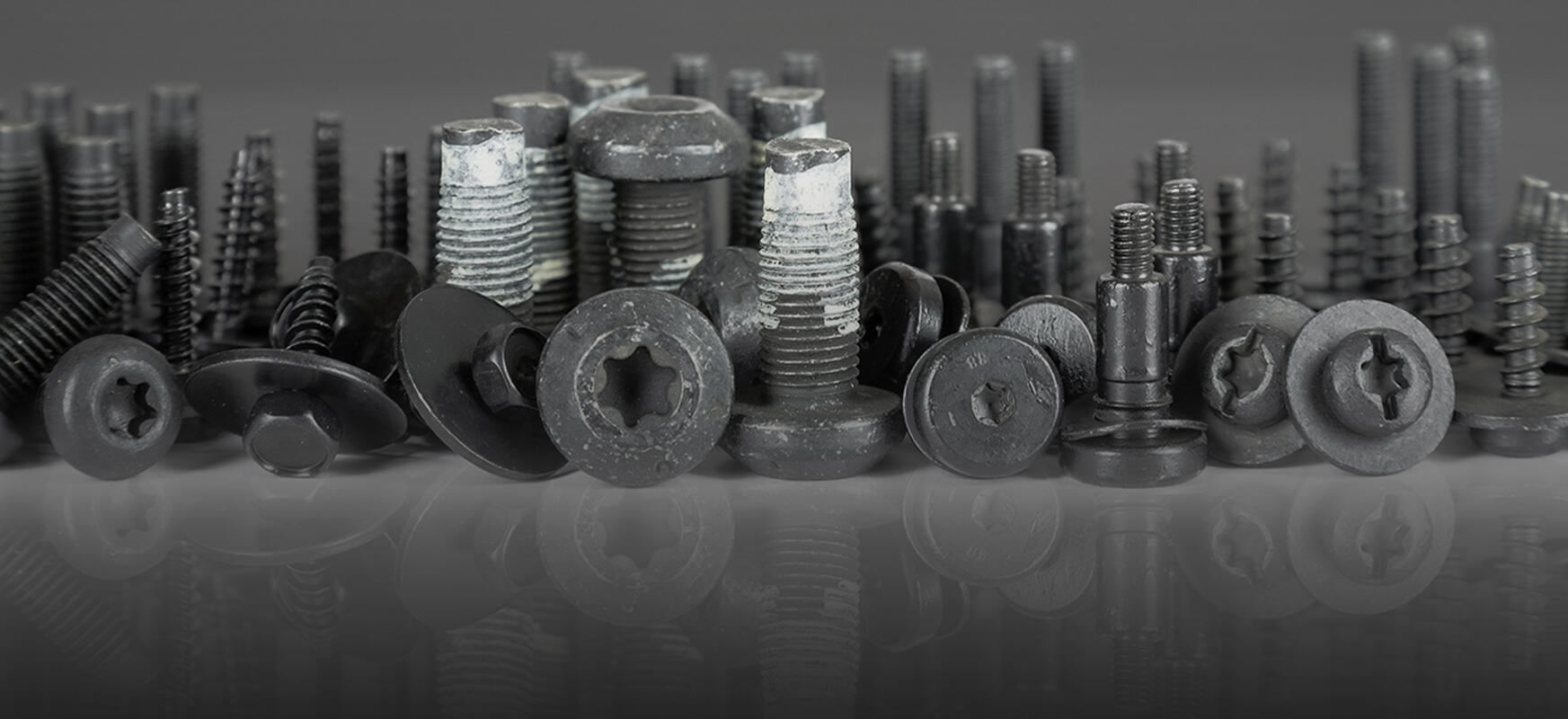
DIN 6922 outlines the dimensions and technical specifications for hexagon flange bolts featuring a reduced shank. These bolts are characterized by a flange, a disc-shaped extension beneath the head, serving as an integrated washer. The inclusion of the flange enhances the bearing surface, facilitating load distribution, particularly advantageous in specific applications. Dog point with truncated cone end.
Serrations under head / Hexalobular socket ISO 10664
Similar to (DIN 6922), these bolts also have a flange (a disc-shaped extension) beneath the head, which acts as an integrated washer. The flange provides a larger bearing surface and aids in distributing the load, making these bolts suitable for various applications. It's worth noting that it is common for these parts to feature serrations under the head, further enhancing their functionality.
a) DIN 7500 specifies self-tapping screws for metal, also known as thread-forming screws. These screws are designed to form or cut threads in a pre-drilled hole in metal materials, without requiring a pre-cut thread.
b) The screw shank has a three-lobe shape instead of a round cross-section, which reduces friction during installation, and facilitates smooth material displacement and efficient thread formation.
c) The long dog point (the extended, unthreaded tip of the screw) acts as a pilot, helping to align the screw with the pre-drilled hole during installation, and faciliates smooth installation.
d) A standard trilobe thread forming screw without dog point is avaialble upon request.
a) The screw head features a hexalobular socket, often referred to by the generic name “6 lobe”
b) The flat underside of the pan head distributes clamping force over a larger area compared to countersunk or round head screws.
c) Although there may be minor differences in dimensional tolerances or thread requirements, both DIN 7985 (German standard) and ISO 14583 (international standard) specify pan head screws.